Aibili Logo Association for Innovation and Biomedical Research on Light

Project details


Optical Modelling of the Human Retina in Health and Disease: from structure to function (PTDC/SAU-ENB/119132/2010)

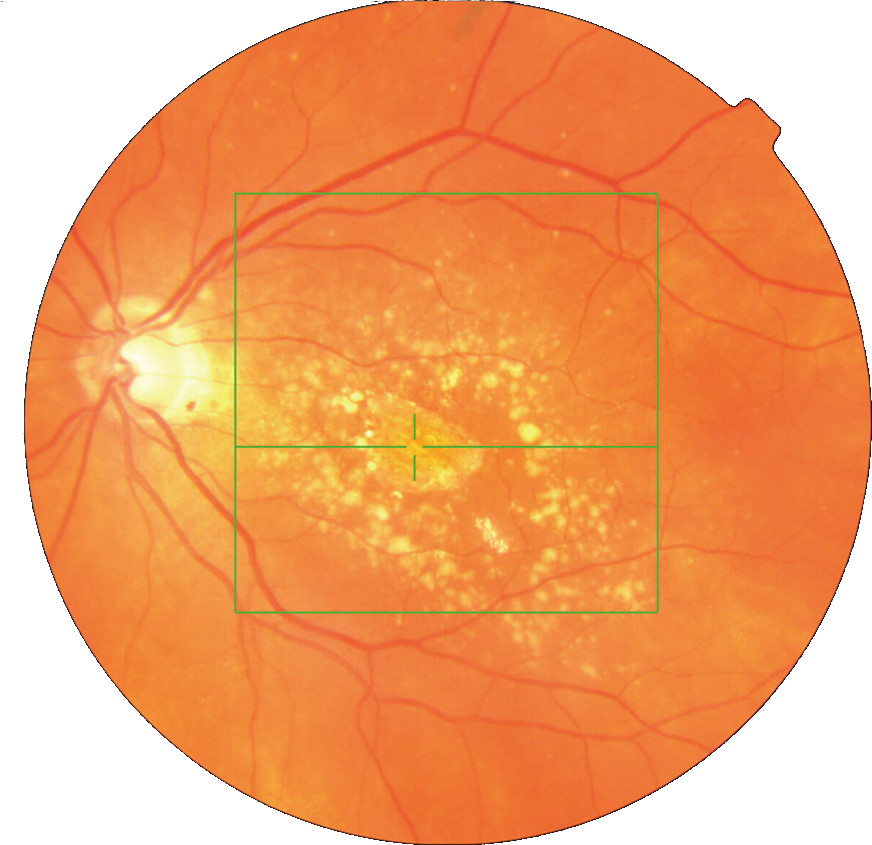
Optical coherence tomography (OCT) is a noninvasive imaging modality undergoing a fast growth of application in the field of ophthalmology because of its unique ability of noninvasive structural imaging of the ocular fundus, allowing to assess the structure of the human retina in vivo. Although its working principle is tailored to imaging the structure, the possibility of gathering functional information from the ocular fundus was already demonstrated [Izatt1997, Bizheva2006]. OCT sensibility to small refractive index changes within the biological tissue is known and mentioned by Abdallah et al. [Abdallah2007]. Along these lines, our research group has demonstrated the association between the inner blood-retinal barrier (BRB) changes and changes on the statistical distribution of the OCT signal. Henceforth, it establishes the link between changes in the BRB function and changes in retina optical properties [Bernardes2009a, Bernardes2011]. This association, demonstrated in vivo for different locations within the macula for the same retina and OCT scan, was additionally demonstrated to be associated with the vascular network because of the depth-wise uneven differences across the retina (from the inner limiting membrane -ILM- to the retinal pigment epithelium -RPE-). In fact, the biggest differences are found in the top layers (close to the ILM), where the retina vascular network can be found. In addition, this is in agreement with the rationale that these alterations are due to the income of substances from the blood stream into the extravascular space [Bernardes2011]. These studies are the natural consequence of previous studies conducted by our research group regarding BRB functional imaging that led to the development of a new imaging modality, the retinal leakage analyzer (RLA) [Lobo1999, Bernardes2005], which has been applied in several clinical trials. The current trend to noninvasive imaging modalities led us to search for noninvasive alternatives to current systems, the reason why, and following our own previous research, two research projects are currently ongoing based on OCT. The first one aims to accurately measure changes of BRB through OCT, therefore not
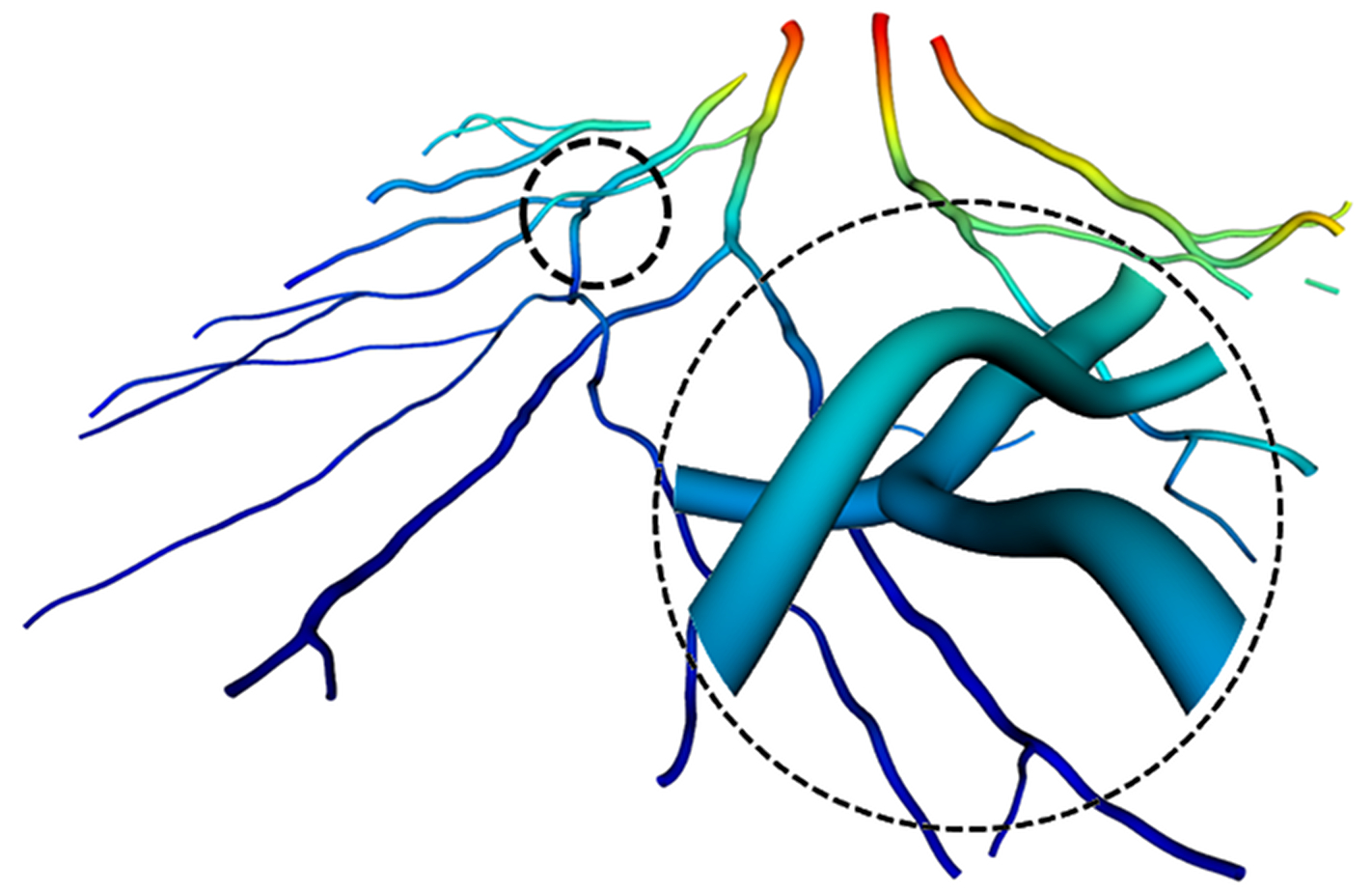
requiring the intravenous administration of sodium fluorescein as a dye, while the second one aims to extract the retina vascular network from OCT volumetric data from the ocular fundus, thus allowing to compute the 3D vascular network in vivo.
Regarding the first of these projects, and to the best of our knowledge, it seems obvious the relation between changes in the BRB status and the changes in the optical properties of the retina, although currently is still unknown to which levels these changes occur within the retina. Previous studies from our research group led to the proposal of two different types of macular edema: a cytotoxic and a vasogenic type, respectively, associated with intracellular leakage and with extracellular and vitreous humor leakage [Cunha-Vaz1984, Lobo1999a]. The most important difference between these two distinct forms of macular edema is related to the fact that the first one represents a threat to photoreceptors, and consequently to a definite loss of vision, as opposed to the second one, commonly reversible. Although the measurement of macular edema is currently more accurate then before, it does not allow to identify where, in a cellular level, the changes in the retina occur to discriminate between intra- or extracellular edema, a major need considering the aforementioned facts. The development of an optical model of the human retina seems, therefore, the only plausible alternative to get knowledge on the changes at the intra- and/or at the extracellular space able to justify the OCT findings in real patients' retinas and hence to validate current existing knowledge and rationale or, alternatively, to point different possibilities. This optical-cellular model of the human retina will allow to simulate changes as promoted by drugs and/or results of therapies like the photodynamic therapy, in addition to a better interpretation of achieved real OCT data from real patients' retinas. This process will be the result of the resolution of the inverse problem, that is, the identification of which changes in the retina would lead to a given OCT scan performed on a patient's retina. In the near future, the model to be developed and the knowledge to be acquired may prove to be fundamental in relation to currently running studies evaluating the link between blood-retinal barrier and blood-brain barrier function status. Ultimately, it would allow to use information from the noninvasive imaging of the human retina as a window to assess potential changes occurring in the brain, namely in the blood-brain barrier.


Rui Bernardes


April 2012


CNTM - Centre of New Technologies for Medicine

Research Team

Conceição Lobo

José Cunha-Vaz

Miguel Morgado

Pedro Serranho

Rui Bernardes

Torcato Santos

Projects by department:

Copyright © 2013 AIBILI   -   Contact Us   -   Site Map   -   Webdesign Glitz Design   -   Programming Bizview